The Complete Guide to Interior Painting: Tips from London's Professional Painters
A practical interior painting guide for London homes, from prep standards to finish selection.
Whether you're refreshing a tired living room or giving your entire home a new lease of life, interior painting in London is one of the most cost-effective ways to transform your space. But a professional-looking result doesn't happen by accident — it comes down to preparation, the right materials, and a methodical approach. This guide walks you through everything you need to know about interior painting, from surface prep to the final coat.
Why Surface Preparation Is Everything
Ask any experienced painter and decorator, and they'll tell you the same thing: preparation accounts for at least 70% of the final result. Skipping or rushing prep is the single biggest mistake DIYers make, and it's why professionally painted rooms look markedly different from home attempts.
Before any paint goes on, surfaces need to be cleaned thoroughly to remove grease, dust, and residue. Cracks and holes should be filled with a flexible filler, sanded smooth once dry, and spot-primed. Flaking or peeling paint must be scraped back and feathered in. Any mould — common in London bathrooms and older properties — needs treating with a specialist solution before you even think about painting over it.
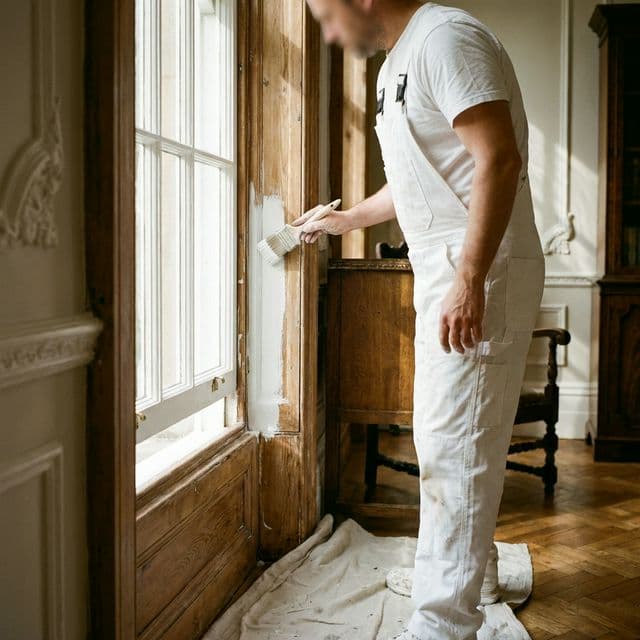
Skirting boards, window frames, and door architraves benefit from a light sand to give the paint something to grip. If you're working with previously painted woodwork, de-glossing the surface is essential for adhesion.
The Importance of Primer
Primer is not optional — it's the foundation of a lasting finish. A good primer does several jobs at once: it seals porous surfaces, improves adhesion, blocks stains, and reduces the number of topcoats required.
- New plaster — use a mist coat (heavily diluted emulsion, typically 80% paint / 20% water) to seal the plaster before applying full-strength paint
- Dark colours — tinted primer dramatically reduces the number of coats needed when going from a light wall to a deep shade
- Bare wood — an oil-based or water-based wood primer prevents the grain from raising and seals knots
- Stains — shellac-based stain blockers are the only reliable solution for nicotine stains, watermarks, or felt-tip pen marks
How Many Coats Do You Actually Need?
The number of coats depends on several factors: the colour change, the quality of paint, and the porosity of the surface. As a general rule:
- One coat of mist coat on new plaster, then two coats of emulsion
- Two coats of emulsion on previously painted walls in similar colours
- Three or more coats when making a dramatic colour change (light to dark, or dark to light)
- Two coats of undercoat plus one topcoat on woodwork
Quality paint makes a genuine difference. Cheaper paints often require additional coats, which negates any money saved. Trade-quality paints — Dulux Trade, Johnstone's Trade, or premium lines from Farrow & Ball — offer superior coverage and durability.
Colour Selection Tips for London Homes
Colour choice can feel overwhelming, but a few principles help narrow it down. London homes — particularly Victorian and Edwardian terraces — often have limited natural light, so colour temperature matters enormously. Warm whites (with yellow or pink undertones) feel cosier in north-facing rooms, while cool whites work beautifully in south-facing spaces that receive plenty of sun.
Test your colours properly. Paint A4-sized swatches directly onto the wall and observe them at different times of day and under both natural and artificial light. Never choose a colour from a tiny chip in a paint shop — colours behave very differently at scale.
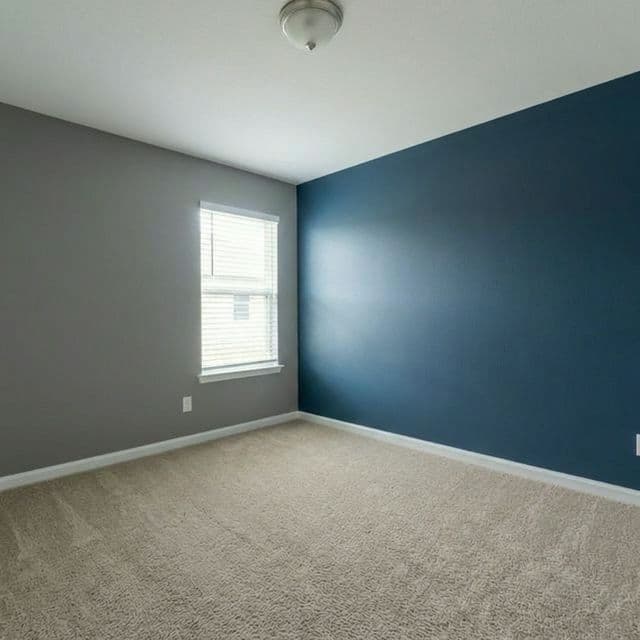
Feature walls are a great way to introduce a bold colour without committing the entire room. The chimney breast wall is the classic choice in London living rooms; in bedrooms, the wall behind the headboard works well.
The Correct Painting Sequence
Order matters more than most people realise. The correct sequence for an interior room is:
- 1. Ceiling — always start here. Any drips or splashes fall onto unpainted walls, which can be covered later
- 2. Walls — cut in around the ceiling line, corners, and woodwork with a brush, then use a roller for the main surface
- 3. Woodwork last — skirting boards, door frames, window frames, and doors are done at the end to avoid getting emulsion on freshly painted gloss or satinwood
Working in natural daylight where possible helps you spot any missed patches or holidays (thin spots) before the paint dries.
Drying Times and Recoat Windows
Patience pays off. Applying a second coat before the first is properly dry leads to peeling, bubbling, and an uneven finish. As a rough guide:
- Water-based emulsion: dry to touch in 1–2 hours, recoat after 4 hours
- Water-based satinwood/eggshell: dry in 2 hours, recoat after 6 hours
- Oil-based gloss: dry in 4–6 hours, recoat after 16–24 hours
In London's damper autumn and winter months, drying times increase. Heating the room slightly and ensuring ventilation helps, but don't use a fan heater too close to the work — it can cause the paint surface to dry faster than the body, leading to cracking.
Common Mistakes to Avoid
- Painting over damp walls — always investigate and fix the source first
- Not stirring paint thoroughly before use
- Overloading the roller or brush, causing runs and drips
- Forgetting to mask up — tape is cheap, repainting trim is not
- Using the wrong sheen level for the space (matt in high-traffic areas chips and marks easily)
- Rushing between coats
When to Hire a Professional
Some jobs are well within the capability of a careful DIYer. But there are situations where professional help pays for itself: large rooms with high ceilings, period properties with intricate cornicing, rooms with severe damp or mould, back-to-back projects where time is critical, and any job where the finish needs to look truly flawless.
Professional painters bring the right tools, the right expertise, and the experience to handle problems before they become expensive mistakes. In London, where property values are high and first impressions matter, the investment is almost always worthwhile.
Ready to transform your home with a professional finish? Get a free, no-obligation quote from Paez Brothers — your local East London painters and decorators with over 10 years of experience. We cover East Ham, Forest Gate, Newham, and across London.