Furniture Upcycling and Painting: Give Your Pieces a New Life
A realistic approach to furniture upcycling in London: prep, primers, topcoats and curing time.
The furniture upcycling trend has been quietly building for several years, and in 2026 it's firmly established as one of the most popular ways East Londoners are refreshing their interiors without the cost and environmental impact of buying new. Furniture painting in London — whether it's a Victorian pine chest of drawers, a 1960s sideboard, or a set of solid oak dining chairs — can transform pieces that feel tired and dated into statement items that anchor a room. Here's what you need to know.
Why Furniture Painting Is Trending in 2026
Several forces have converged to make furniture painting a mainstream activity rather than a niche craft. The cost-of-living squeeze has made replacing quality furniture an unappealing proposition when the same money could transform what you already own. Growing environmental awareness has shifted attitudes toward "buy new" — keeping existing furniture in use is genuinely the more sustainable option. And a generation of East Londoners who've grown up with Charity Shop Cool and vintage markets have no particular attachment to everything being new.
The result is a thriving furniture upcycling scene in East London — and a growing demand for professional furniture painting where the finish needs to be truly excellent rather than a well-intentioned home project.
What Furniture Can Be Painted?
Almost any solid furniture can be successfully painted, but different materials require different approaches:
Solid Wood
Solid wood furniture takes paint beautifully. Pine, oak, beech, walnut, mahogany — all can be painted to a superb finish. The grain provides excellent adhesion, and the finished result is durable and long-lasting. Antique and Victorian furniture in solid wood is particularly popular for painting, as the quality of older solid wood construction is often superior to modern equivalents.
MDF and Engineered Wood
MDF (medium-density fibreboard) has a smooth, stable surface that can take paint exceptionally well — better, in some respects, than solid wood because it doesn't have grain movement that can cause paint to crack over time. IKEA furniture in MDF or particleboard is one of the most commonly painted pieces we see — quality bones with a finish that can be upgraded significantly through painting.
Metal Furniture
Metal frames, legs, and hardware can all be painted using specialist metal primers and paints. Mid-century metal furniture — particularly chairs and table frames — can look exceptional painted in a matte or chalky finish.
Wicker and Rattan
Natural wicker and rattan pieces can be spray-painted to great effect. The texture of the woven surface means spray application is essential — brush painting wicker is extremely difficult and produces patchy results. A professionally sprayed wicker chair in a chalky white or sage green is a genuinely stunning piece.
Preparation: The Most Important Step
As with wall painting, preparation determines the quality of the finished result. For furniture, this means:
- Cleaning — all grease, wax, and polish must be removed. Waxed furniture is particularly important to degrease thoroughly, as wax prevents paint adhesion. White spirit is effective for wax removal; sugar soap for general grease and grime
- Sanding — all surfaces need a light sand to provide a key for the primer. Smooth surfaces (MDF, lacquered pieces) need more thorough sanding to ensure adhesion
- Priming — a quality primer suited to the material is essential. Bare wood needs a wood primer; previously lacquered or varnished pieces may need a bonding primer; metal needs a specialist metal primer
- Filling — any chips, dents, or damaged areas in wood can be filled with wood filler, sanded smooth, and re-primed before painting
Choosing the Right Paint for Furniture
Not all paint is suitable for furniture. Walls can get away with standard emulsion in low-traffic rooms, but furniture sees constant handling, cleaning, and friction — and the paint must be tough enough to handle it.
For furniture, the best options include:
- Chalk paint — very popular for the upcycling aesthetic, minimal preparation required, ultra-matte finish. Requires a wax or varnish topcoat to protect the surface
- Hard-wearing furniture paints — specialist products from brands like Annie Sloan, Frenchic, or Rust-Oleum, formulated for furniture with built-in durability
- Cabinet paint / kitchen paint — water-based paints formulated for high-traffic surfaces, excellent durability, available in a huge range of colours
- Two-pack lacquer (spray-applied) — the most durable option, produces a truly factory-quality finish, requires professional spray equipment
Professional vs DIY Results
The gap between professional and DIY furniture painting results is perhaps wider than in any other area of decoration. This is not a criticism of DIY attempts — it's simply a reflection of how demanding achieving a truly smooth, brush-mark-free finish on furniture is. Furniture is handled close-up, seen from all angles, touched constantly. Any imperfection is immediately apparent.
Professional furniture painting — particularly spray-applied — delivers a finish that is genuinely as good as factory production. Smooth, even, consistent, with no brush marks, drips, or colour variation. The durability of professionally applied finishes also significantly exceeds DIY results because the correct primer and topcoat combination is used for the specific material.
Cost-Effective Interior Update
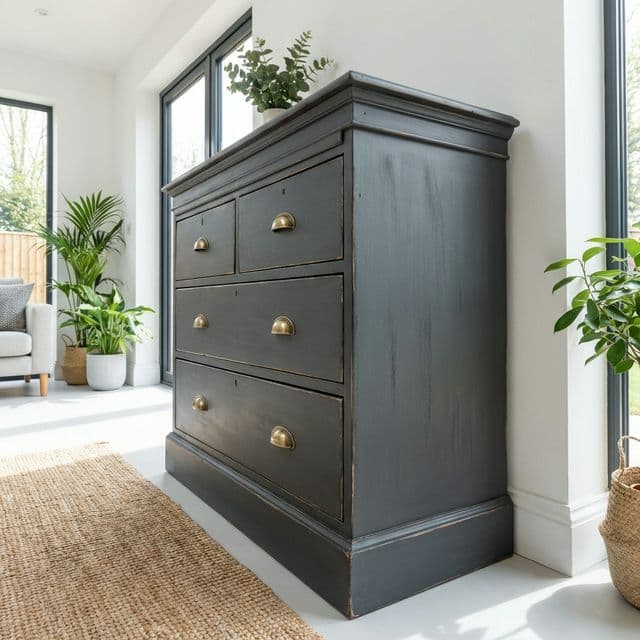
Furniture painting represents extraordinary value compared to buying replacement pieces. A solid oak dining table and six chairs that would cost £1,500–£3,000 new can be professionally painted for a fraction of that. A Victorian chest of drawers that's structurally sound but looks tired can be transformed for under £300 into a statement piece worth far more than its current value.
For East London homeowners who've inherited period furniture or picked up quality pieces from local markets and charity shops, professional painting is the final step that elevates a find into a finished, intentional piece.
Thinking about giving your furniture a new lease of life? Get in touch with Paez Brothers — we provide furniture painting and upcycling services across East London, with results that will exceed your expectations.