Preparing Your Home for Professional Painting: A Simple Guide
Save time and ensure the best results by properly preparing your space before the painters arrive. Here is what you need to know.
Hiring a professional painter is not just a logistical exercise — it's a creative collaboration. The practical preparation (clearing rooms, moving furniture) matters, but so does the less tangible side: knowing how to communicate what you want, making confident colour decisions, and understanding what to expect on the day work begins. This guide focuses on how to prepare for professional painters from the human side of the experience.
Start With a Clear Vision — But Hold It Lightly
Before the team arrives, take time to think about what you actually want the space to feel like. Not just the colour, but the atmosphere. Lighter and airier? Warmer and cosier? More dramatic and grown-up? Calm and restful?
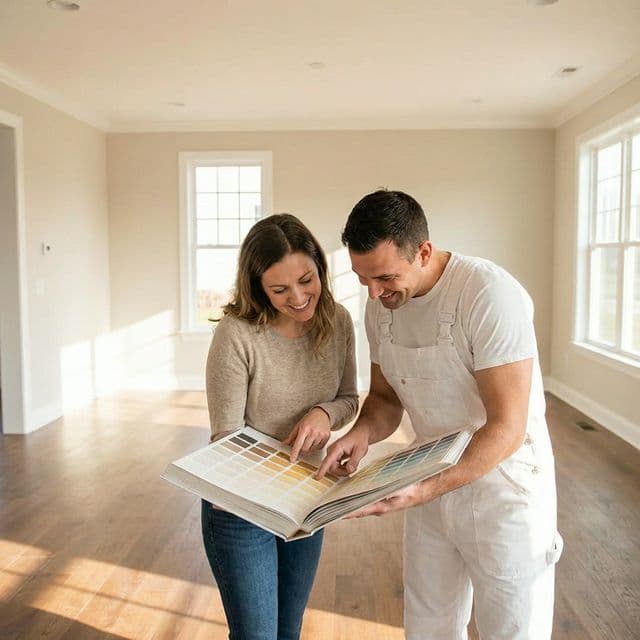
Starting with the feeling you want, rather than a specific colour, is a more reliable way to make good decisions. Colour charts are useful references, but the best colour choices usually come from understanding what role the room plays in your life and how you want to feel when you're in it.
Gather references — photographs from magazines, screenshots from Instagram or Pinterest, images of rooms you've loved in other people's homes. Bring these to your pre-work meeting with the decorator. A single image communicates more accurately than trying to describe a colour verbally.
Test Your Colours Properly
This is the single piece of advice we give most consistently, and the one that's most often ignored: test your colours on the actual wall before committing. Not on a piece of paper, not from a small chip — on the actual surface, in the actual room, at a decent scale (at least A4 sized, ideally larger).
Colours behave entirely differently at scale compared to a small chip, and entirely differently depending on the light in your specific room. A colour that looks perfect in a south-facing showroom can look cold and washed out in a north-facing East London bedroom. A deep tone that seems overwhelming on a small chip can look stunning and sophisticated applied to a full wall.
Paint sample pots are inexpensive. Buy two or three options, paint them directly onto the wall (or onto large sheets of lining paper if you'd rather not commit even temporarily), and observe them at different times of day and under both natural and artificial light. The few pounds spent on sample pots could save you from disliking a colour you've had painted across an entire room.
The Brief: How to Communicate What You Want
A good decorator is not a mind reader, but they should be a skilled listener. The pre-work brief — the conversation that happens at the start of the job — is your opportunity to ensure the team knows exactly what you want and are clear on any non-negotiable preferences.
Things to communicate clearly at the brief:
- The finish you want — matt, eggshell, satin? Flat and chalky, or with a subtle sheen?
- Any areas of particular concern — the hairline crack you want made invisible, the patch behind the radiator that's always been patchy, the corner that always seems to collect scuffs
- Priority areas — if you're time-constrained, which rooms or surfaces matter most?
- Your colour scheme — even if the decorator is familiar with the colours, walk them through the logic. Which wall is the feature? Should the ceiling be painted in the same tone as the walls, or kept white?
- Any fixed points — furniture staying in the room, art you plan to rehang, a piece that the colour needs to work around
Colour Testing: The Brief Meeting Before Work Starts
If you've tested colours on sample patches and made your decision, bring the paint chips or sample pots with you to the brief meeting. Point out exactly which colours go where — main walls, woodwork, ceiling, feature wall — so there's no ambiguity.
If you're using colours from Farrow & Ball, Little Greene, or another premium brand, confirm the exact colour names and numbers (not just "the dark blue — Hague Blue, No. 30"). Paint names within ranges can be similar, and accuracy here prevents expensive mistakes.
Ask the decorator to confirm back to you what they've understood. A quick verbal summary — "ceiling in Cornforth White, main walls in Purbeck Stone, woodwork in Wimborne White, feature chimney breast in Hague Blue" — takes thirty seconds and prevents any miscommunication.
What to Expect on Day One
Day one sets the tone for the entire job. A professional team will arrive at the agreed time, introduce themselves, and ask for a brief walkthrough to confirm the scope before they start moving furniture or laying dust sheets.
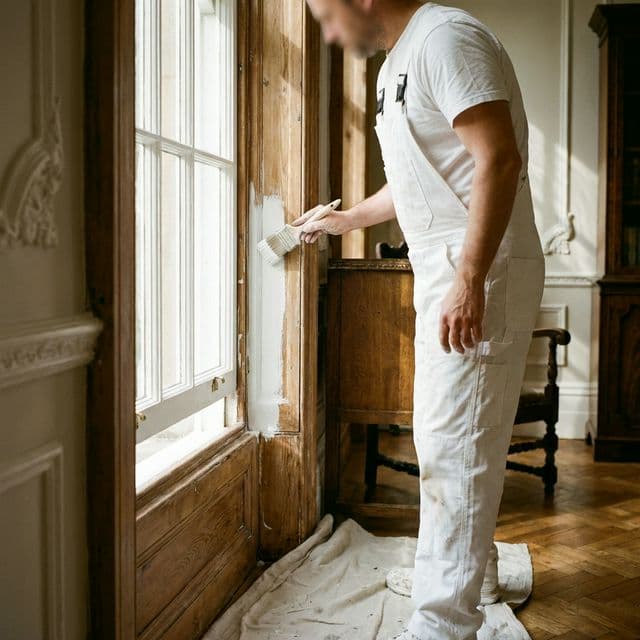
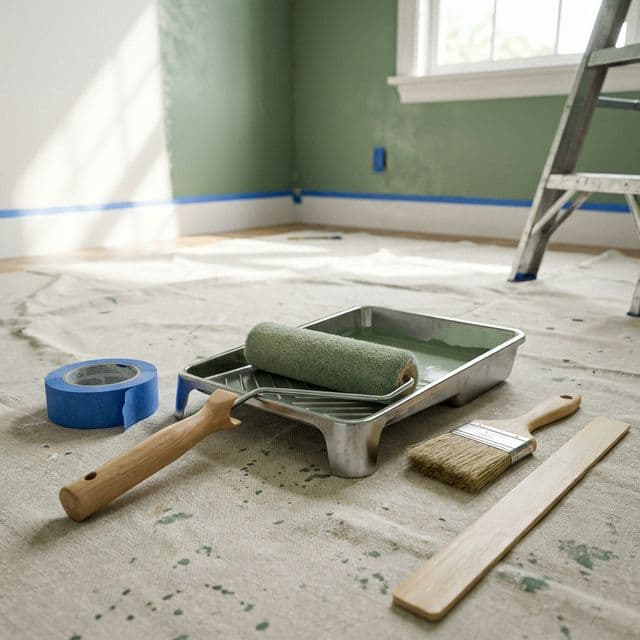
In the first hours, you'll see a lot of preparation activity that doesn't look much like painting: furniture moving, dust sheeting, masking up, filling cracks, sanding woodwork. This is normal — and it's a good sign. A team that starts rolling paint within twenty minutes of arriving has skipped the preparation stage.
After the brief walkthrough, you don't need to stay home. Most customers leave the team to work and check in at the end of the day. Hovering in the room being painted is generally counterproductive for everyone. Trust the process — and if you have a question or concern, raise it with the team lead.
Managing Your Expectations Around Drying Time
One of the most common points of confusion for customers is drying time. Paint that looks dry to the touch is not necessarily ready for a second coat, and paint that's had its final coat applied is not immediately ready for furniture to be moved back against the walls.
A professional team will manage this without you needing to worry about it — they won't apply a second coat before the first is ready. But it's worth knowing that the job may span more days than you expected because of the need to respect drying times. A job that's rushed because of time pressure almost always looks rushed in the finished result.
The Final Walkthrough
Before the team packs up on the last day, ask for a final walkthrough inspection together. This is the moment to point out anything you want touched up or addressed. It's far easier to flag an issue while the team is still on site than to try to arrange a return visit later.
Look at all surfaces in good light — natural daylight is best for spotting any inconsistencies in coverage. Check all cut-in lines (ceiling to wall, wall to skirting), check corners and recesses, and look at the woodwork at an angle to check for any drips or brush marks that might have been missed.
A professional team will not be defensive about this inspection — they want the result to be right, and they'll address any issues immediately.
Ready to start the process? Request your free quote from Paez Brothers — and let's have the conversation about transforming your space.